New PhD at SOS

December 15th, 2011  |  Published in Marine ecology

The functioning of canyons on the US East Coast.

3 year PhD studentship at the School of Ocean Sciences, Bangor University with Dr Andrew J Davies.

Project description:

This is an exciting opportunity to join an international team of researchers investigating the functioning of deep-sea canyons on the US East Coast. This studentship is part of a larger project funded by BOEMRE (now the Bureau of Energy Management), incorporating elements of archaeology, physics, geology and biology. The successful candidate will be based in Menai Bridge, but will be expected to conduct fieldwork on NOAA vessels off the coast of the USA in collaboration with Dr Steve Ross of the University of North Carolina at Wilmington and Dr Sandra Brooke of the Marine Conservation Institute. The candidate will also be expected to travel to the Netherlands Institute for Sea Research (NIOZ) on the Island of Texel to conduct data analysis and project preparation with Drs Furu Mienis and Gerard Duineveld.

Overall, the study will conduct a full ecosystem evaluation of deep-water hard bottom, coral and soft substrata communities, and shipwreck sites off Virginia and Maryland within and adjacent to submarine canyons. The project essentially has three main components, 1) initially the student will be expected to develop habitat suitability models of the canyons based on archived and current data, but will develop these further as we collate more information of the canyons. 2) Investigate the physical setting and transport of sediment and organic material through the canyons using deep-sea lander technology developed by the NIOZ. 3) Devise observations and experiments to determine distributional drivers of sessile fauna within the physical context of the canyon.

The successful candidate:

This is a 3 year funded position, the successful candidate will be expected to hold an upper second class honours degree and a master’s degree in relevant science, preferentially with training in marine ecology. The project is available as soon as possible, so preference will be given to candidates who can start in January or February 2012. The successful candidate will be expected to travel to the US to conduct research, and as such must hold a valid passport and a full clean driving license. To apply please send a CV and a comprehensive covering letter, outlining your plans and your reasons for wanting to complete this project. The application deadline is the 13th January 2012.

Informal enquiries and submission of an application should be made to:

Dr Andrew Davies at andrew.j.davies @ bangor.ac.uk.

The influence of near-bed hydrodynamic conditions on cold-water corals

November 24th, 2011  |  Published in Marine ecology, Publications

Furu Mienis, Gerard Duineveld, Andy Davies, Steve Ross, Harvey Seim, John Bane, Tjeerd van Weering

The Nancy Foster was our base in the GoM

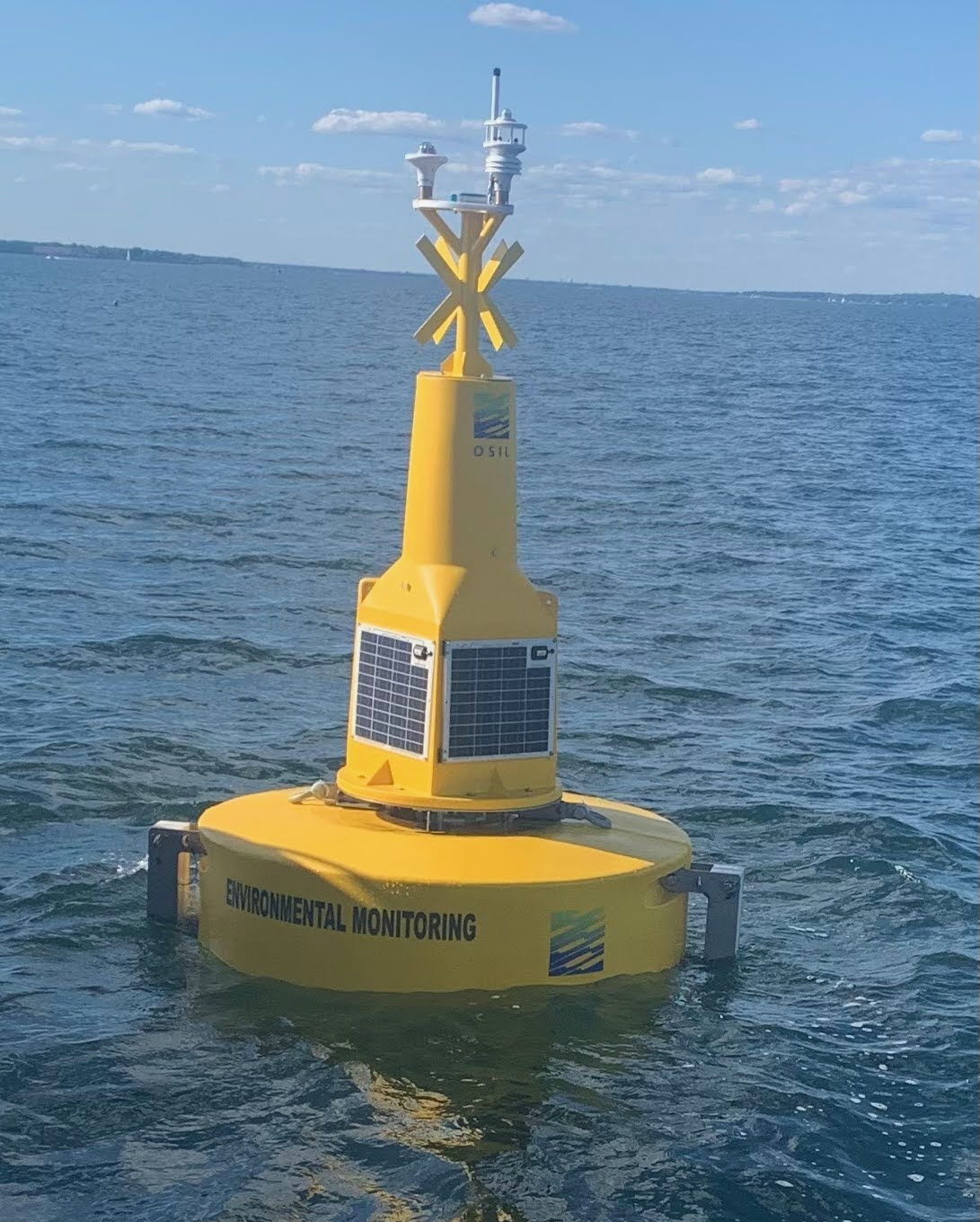
Near-bed hydrodynamic conditions were recorded for almost one year in the Viosca Knoll area (lease block 826), one of the most well-developed cold-water coral habitats in the Gulf of Mexico. Here, a reef-like cold-water coral ecosystem, dominated by the coral Lophelia pertusa, resembles coral habitats found off the southeastern US coast and the North East Atlantic. Two landers were deployed in the vicinity and outside of the coral habitat and measured multiple near-bed parameters, including temperature, salinity, current speed and direction and optical and acoustic backscatter. Additionally, the lander deployed closest to the coral area was equipped with a sediment trap that collected settling particles over the period of deployment at 27 day intervals. Long-term monitoring showed, that in general, environmental parameters, such as temperature (6.5–11.6 °C), salinity (34.95–35.4) and current speed (average 8 cm s−1, peak current speed up to 38 cm s−1) largely resembled conditions previously recorded within North East Atlantic coral habitats. Major differences between site VK 826 and coral areas in the NE Atlantic were the much higher particle load, and the origin of the particulate matter. Several significant events occurred during the deployment period beginning with an increase in current speed followed by a gradual increase in temperature and salinity, followed by a rapid decrease in temperature and salinity. Simultaneously with the decrease in temperature and salinity, the direction of the current changed from west to east and cold and less turbid water was transported upslope. The most prominent event occurred in July, when a westward flow lasted over 21 days. These events are consistent with bottom boundary layer dynamics influenced by friction (bottom Ekman layer). The Mississippi River discharges large quantities of sediment and dominates sedimentation regimes in the area. Furthermore, the Mississippi River disperses large amounts of terrestrial organic matter and nutrients, resulting in increased primary productivity, whereby marine organic matter is produced that will sink to the seafloor and can serve as food for the cold-water corals and associated species. As a result mass fluxes from the sediment trap were higher (1120–4479 mg m−2 day−1) than those observed in the North East Atlantic and were highest during periods of westward-flow, which corresponded to warm turbid water. During eastward-flow, colder and less turbid water was pushed upslope, resulting in lower mass fluxes. Trap samples had a low CaCO3, high organic carbon content and high C/N ratios, suggesting a fluvial origin. The high sediment load in the water column can be a limiting factor for coral growth, especially since the corals can be smothered with sediment. However, eastward-flows provided periods of relatively clearer water that can remove sediment from the coral area and allow corals to expel sediment from their polyps. Around Viosca Knoll food supply comes from two possible sources. During April and June several fluorescence peaks were observed near the seabed, showing the arrival of phytodetritus in the area. Furthermore, a consistent diel vertical migration of zooplankton was observed that might provide an additional food source.

Request PDF

To request a PDF of this paper, please enter your email address here:

Full citation

F. Mienis, G.C.A. Duineveld, A.J. Davies, S.W. Ross, H. Seim, J. Bane & T.C.E. van Weering (2012) “The influence of near-bed hydrodynamic conditions on cold-water corals in the Viosca Knoll area, Gulf of Mexico” Deep-sea Research vol 1 60(1): 32-45.

 DOI

doi:10.1016/j.dsr.2011.10.007