Publications

The influence of near-bed hydrodynamic conditions on cold-water corals

November 24th, 2011  |  Published in Marine ecology, Publications

Furu Mienis, Gerard Duineveld, Andy Davies, Steve Ross, Harvey Seim, John Bane, Tjeerd van Weering

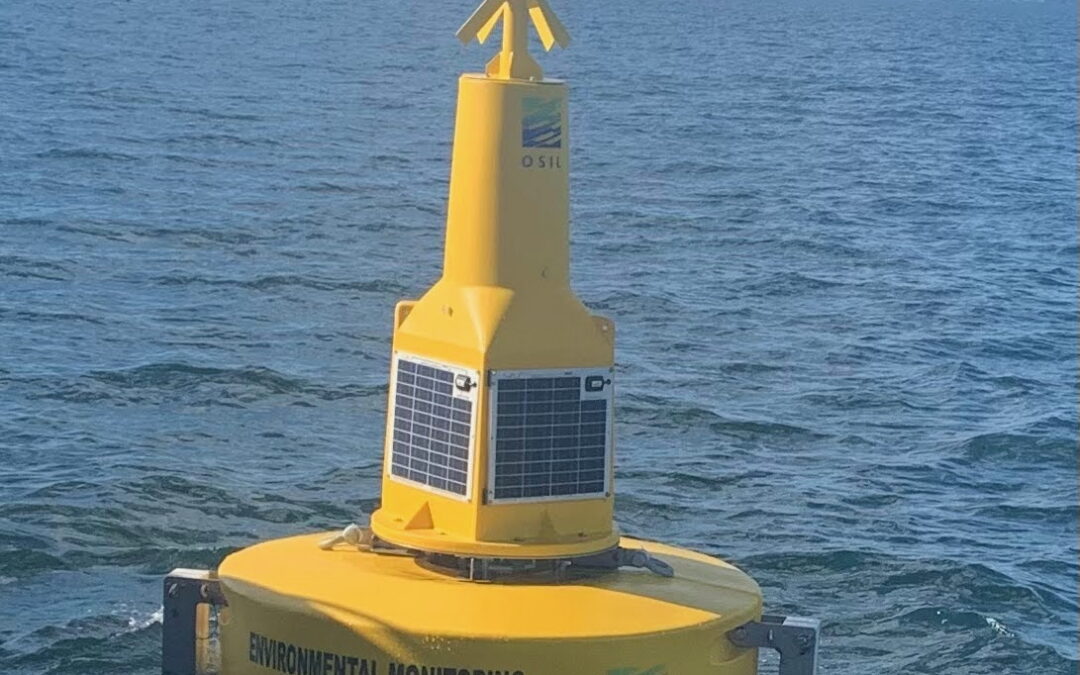
The Nancy Foster was our base in the GoM

Near-bed hydrodynamic conditions were recorded for almost one year in the Viosca Knoll area (lease block 826), one of the most well-developed cold-water coral habitats in the Gulf of Mexico. Here, a reef-like cold-water coral ecosystem, dominated by the coral Lophelia pertusa, resembles coral habitats found off the southeastern US coast and the North East Atlantic. Two landers were deployed in the vicinity and outside of the coral habitat and measured multiple near-bed parameters, including temperature, salinity, current speed and direction and optical and acoustic backscatter. Additionally, the lander deployed closest to the coral area was equipped with a sediment trap that collected settling particles over the period of deployment at 27 day intervals. Long-term monitoring showed, that in general, environmental parameters, such as temperature (6.5–11.6 °C), salinity (34.95–35.4) and current speed (average 8 cm s−1, peak current speed up to 38 cm s−1) largely resembled conditions previously recorded within North East Atlantic coral habitats. Major differences between site VK 826 and coral areas in the NE Atlantic were the much higher particle load, and the origin of the particulate matter. Several significant events occurred during the deployment period beginning with an increase in current speed followed by a gradual increase in temperature and salinity, followed by a rapid decrease in temperature and salinity. Simultaneously with the decrease in temperature and salinity, the direction of the current changed from west to east and cold and less turbid water was transported upslope. The most prominent event occurred in July, when a westward flow lasted over 21 days. These events are consistent with bottom boundary layer dynamics influenced by friction (bottom Ekman layer). The Mississippi River discharges large quantities of sediment and dominates sedimentation regimes in the area. Furthermore, the Mississippi River disperses large amounts of terrestrial organic matter and nutrients, resulting in increased primary productivity, whereby marine organic matter is produced that will sink to the seafloor and can serve as food for the cold-water corals and associated species. As a result mass fluxes from the sediment trap were higher (1120–4479 mg m−2 day−1) than those observed in the North East Atlantic and were highest during periods of westward-flow, which corresponded to warm turbid water. During eastward-flow, colder and less turbid water was pushed upslope, resulting in lower mass fluxes. Trap samples had a low CaCO3, high organic carbon content and high C/N ratios, suggesting a fluvial origin. The high sediment load in the water column can be a limiting factor for coral growth, especially since the corals can be smothered with sediment. However, eastward-flows provided periods of relatively clearer water that can remove sediment from the coral area and allow corals to expel sediment from their polyps. Around Viosca Knoll food supply comes from two possible sources. During April and June several fluorescence peaks were observed near the seabed, showing the arrival of phytodetritus in the area. Furthermore, a consistent diel vertical migration of zooplankton was observed that might provide an additional food source.

Request PDF

To request a PDF of this paper, please enter your email address here:

Full citation

F. Mienis, G.C.A. Duineveld, A.J. Davies, S.W. Ross, H. Seim, J. Bane & T.C.E. van Weering (2012) “The influence of near-bed hydrodynamic conditions on cold-water corals in the Viosca Knoll area, Gulf of Mexico” Deep-sea Research vol 1 60(1): 32-45.

 DOI

doi:10.1016/j.dsr.2011.10.007


Habitat Suitability for Cold-Water Corals

April 16th, 2011  |  Published in Computers, General ecology, Marine ecology, Publications

The framework-forming coral Lophelia pertusa

Andrew J. Davies and John Guinotte

Cold-water corals are found in all the oceans of the world. Usually below 200 metres, they create structurally complex habitat that gives rise to a unique deep-sea ecosystem in, what otherwise may be a relatively featureless area. Numerous other filter-feeding organisms are found, along with fish that may use the coral as a nursery ground. Yet, we don’t know where many occurrences of cold-water coral are….

This is where habitat suitability modelling comes in. By using the best available scientific information and powerful statistical tools, we are able to predict, based on the species environmental requirements where they are likely to occur. Mine and John’s work, published in PLoS ONE is an important step towards turning habitat suitability modelling into a viable tool for the protection of vulnerable marine ecosystems in the deep sea. This paper represents several years of work, designing and constructing new approaches to allow us to model coral distributions at high resolution. The outputs speak for themselves, with a 1 km resolution, we may finally be able to say to other researchers, go here, you have a good chance of finding coral in this area. Or, we may be able to say, there is a high probability of coral occurrence here, perhaps we could designate this area closed to bottom contact fishing or other exploitation.

Read the abstract below, or download the PDF from either my site or the PLoS ONE site.

Download article

Davies and Guinotte (2011) PLoS ONE (146)

Full citation

Davies AJ, Guinotte JM (2011) Global Habitat Suitability for Framework-Forming Cold-Water Corals. PLoS ONE 6(4): e18483. doi:10.1371/journal.pone.0018483

Abstract

Predictive habitat models are increasingly being used by conservationists, researchers and governmental bodies to identify vulnerable ecosystems and species’ distributions in areas that have not been sampled. However, in the deep sea, several limitations have restricted the widespread utilisation of this approach. These range from issues with the accuracy of species presences, the lack of reliable absence data and the limited spatial resolution of environmental factors known or thought to control deep-sea species’ distributions. To address these problems, global habitat suitability models have been generated for five species of framework-forming scleractinian corals by taking the best available data and using a novel approach to generate high resolution maps of seafloor conditions. High-resolution global bathymetry was used to resample gridded data from sources such as World Ocean Atlas to produce continuous 30-arc second (~1 km2) global grids for environmental, chemical and physical data of the world’s oceans. The increased area and resolution of the environmental variables resulted in a greater number of coral presence records being incorporated into habitat models and higher accuracy of model predictions. The most important factors in determining cold-water coral habitat suitability were depth, temperature, aragonite saturation state and salinity. Model outputs indicated the majority of suitable coral habitat is likely to occur on the continental shelves and slopes of the Atlantic, South Pacific and Indian Oceans. The North Pacific has very little suitable scleractinian coral habitat. Numerous small scale features (i.e., seamounts), which have not been sampled or identified as having a high probability of supporting cold-water coral habitat were identified in all ocean basins. Field validation of newly identified areas is needed to determine the accuracy of model results, assess the utility of modelling efforts to identify vulnerable marine ecosystems for inclusion in future marine protected areas and reduce coral bycatch by commercial fisheries.

Tags: , , , , ,