Publications

HERMES-GIS: A tool connecting scientists and policymakers

March 9th, 2009  |  Published in Marine ecology, Publications

Ben De Mol, Neus Querol, Andrew J. Davies, Angela Schäfer, Frederica Foglini, Genoveva Gonzales-Mirelis, Kathrin Kopke, Declan Dunne, Ingo Schewe, Fabio Trincardi, Miquel Canals

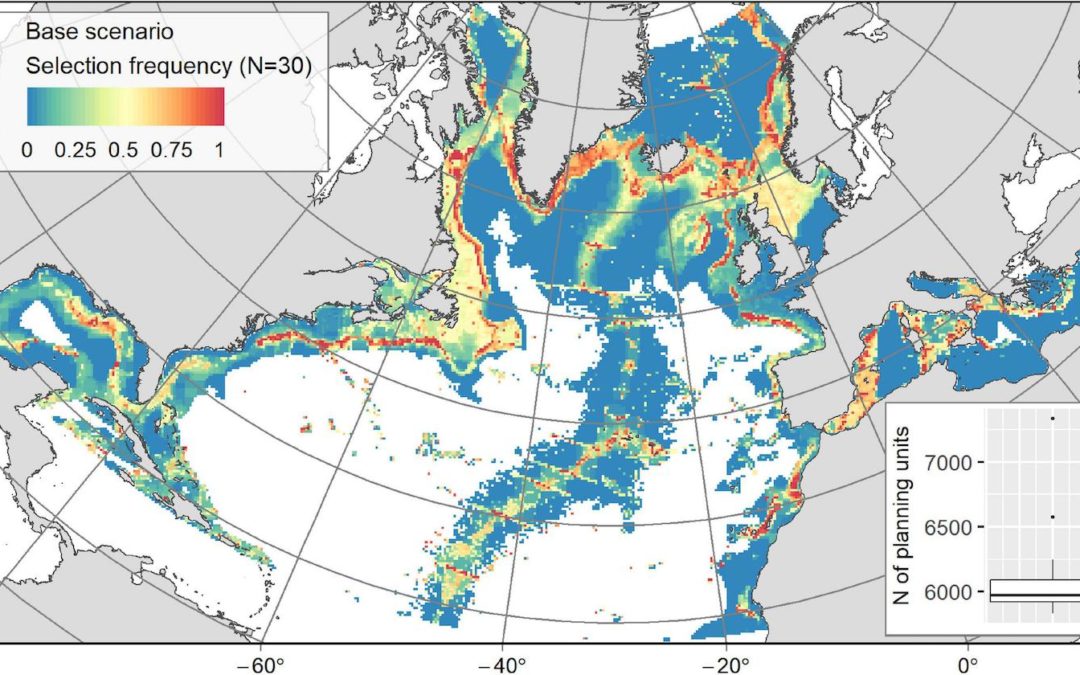
An important aim of large, pan-European scientific projects with numerous research groups is to integrate and visualize the acquired distributed data sets and results. The large volume of diverse data gathered and the need to disseminate results among the scientific community and beyond requires using a Geographic Information System (GIS). This article presents our experiences in creating a unified Web-based GIS for HERMES. The HERMES-GIS is based on Web Mapping Services that include direct links to the World Data Center for Marine Environmental Science and its large, long-term geoscience data archive and publication unit, PANGAEA (http://www.pangaea.de). It incorporates metadata and data from all project partners to provide users with basic analytical and visualization tools for archived (distributed) and personal (local) data, and it is also a policymaking tool. Additionally, we illustrate two important GIS applications inside the HERMES community— the use of data models to integrate several subdisciplines and the use of predictive habitat modeling.

Publication in Oceanography 22(1).

Request PDF

To request a PDF of this paper, please enter your email address here:
Your email address is not stored, it is only used to send an email to you.

Full citation

De Mol B, Querol N, Davies AJ, Schäfer A, Foglini F, Gonzales-Mirelis G, Kopke K, Dunne D, Shewe I, Trincardi F, Canals M (2009) HERMES-GIS: a tool to connect scientists. Oceanography 22(1): 144-153.

Tags: , , ,

Maintaining turbidity and current flow in laboratory aquarium studies, a case study with Sabellaria spinulosa

February 16th, 2009  |  Published in Marine ecology, Publications

Andrew J. Davies, Kim S. Last, Karl Attard, Vicki J. Hendrick

Sabellaria spinulosa

Many aquatic organisms rely on the suspension of particulate matter for food or for building materials, yet these conditions are difficult to replicate in laboratory mesocosms. Consequently, husbandry and experimental conditions may often be sub-optimal. The VOrtex Resuspension Tank (VORT) is a simple and reliable system for the resuspension of food or sediments using an enclosed airlift. The particle rain from the lift is mixed in the tank by two water inputs that provide directional current flow across the study organism(s). The vortex mixing creates a turbulent lateral water flow that allows the distribution of particulate matter outwards from the sediment outflow. By calibrating a VORT it is possible to control sedimentation rate by manipulating water and air flow rates. As an example application, three VORTs were maintained under different sediment loading to assess the sediment fraction utilisation and tube growth rates of the tube-building polychaete worm Sabellaria spinulosa. S. spinulosa consistently utilised a lower mean particle size than that of the background sediment when provided with well sorted medium sands. Under sediment starved conditions, there was net erosion of colonies whereas under intermediate and high sediment rates there was consistent cumulative growth throughout a 15 d experiment. This highlights the importance of suspended sediment for S. spinulosa and also the suitability of the VORT system for maintaining organisms with suspended matter requirements.

Publication in Journal of Experimental Marine Biology and Ecology 370.

Request PDF

To request a PDF of this paper, please enter your email address here:
Your email address is not stored, it is only used to send an email to you.

Full citation

Davies, A.J., Last, K.S., Attard, K. & Hendrick, V.J. (accepted) “Maintaining turbidity and current flow in laboratory aquarium studies, a case study using Sabellaria spinulosa” Journal of Experimental Marine Biology and Ecology 370, 35-40.

http://dx.doi.org/10.1016/j.jembe.2008.11.015

Tags: , , ,